Substation automation: how field devices, IEDs, SCADA, and operations work as a single system
An automated substation must do more than carry signals. It has to preserve the meaning of each piece of information, recognize its quality, record when the event occurred, control who can issue commands, and respond predictably when part of the architecture fails. This guide follows the path of data and commands — from the primary equipment to the operations center — and shows what needs to be specified, integrated, tested, and maintained.
- Content:
- POWER Engineering
- Updated on
- September 2026
- Technical reading:
- approximately 24 minutes
Automation · SCADA · IEC 61850 · GOOSE · Networks · Synchronism · Retrofit
In summary
Automation is a chain
Sensors, contacts, IEDs, controllers, network, servers, gateways, HMI, and operations centers only form a system when data, commands, and responsibilities are coordinated.
Connecting is not integrating
Available communication does not prove that names, states, quality, timing, logic, interlocks, and fault responses are correct.
Going digital changes how you test
When functions depend on shared messages and configurations, integrated testing, version management, and documentation become part of operational availability.
What is substation automation?
Substation automation is the coordinated set of functions, equipment, networks, software, and procedures that makes it possible to observe the electrical process, execute controls, record events, exchange information, and support operation safely.
It can range from an architecture with hardwired signals, a remote terminal unit, and a local SCADA to a system based on IEDs, IEC 61850 data models, device-to-device communication, and a process bus. Between these extremes there is a wide variety of hybrid solutions — and many real installations will remain hybrid for years.
For this reason, automation should not be defined by the presence of a protocol, a server, or a screen. The more useful question is another:
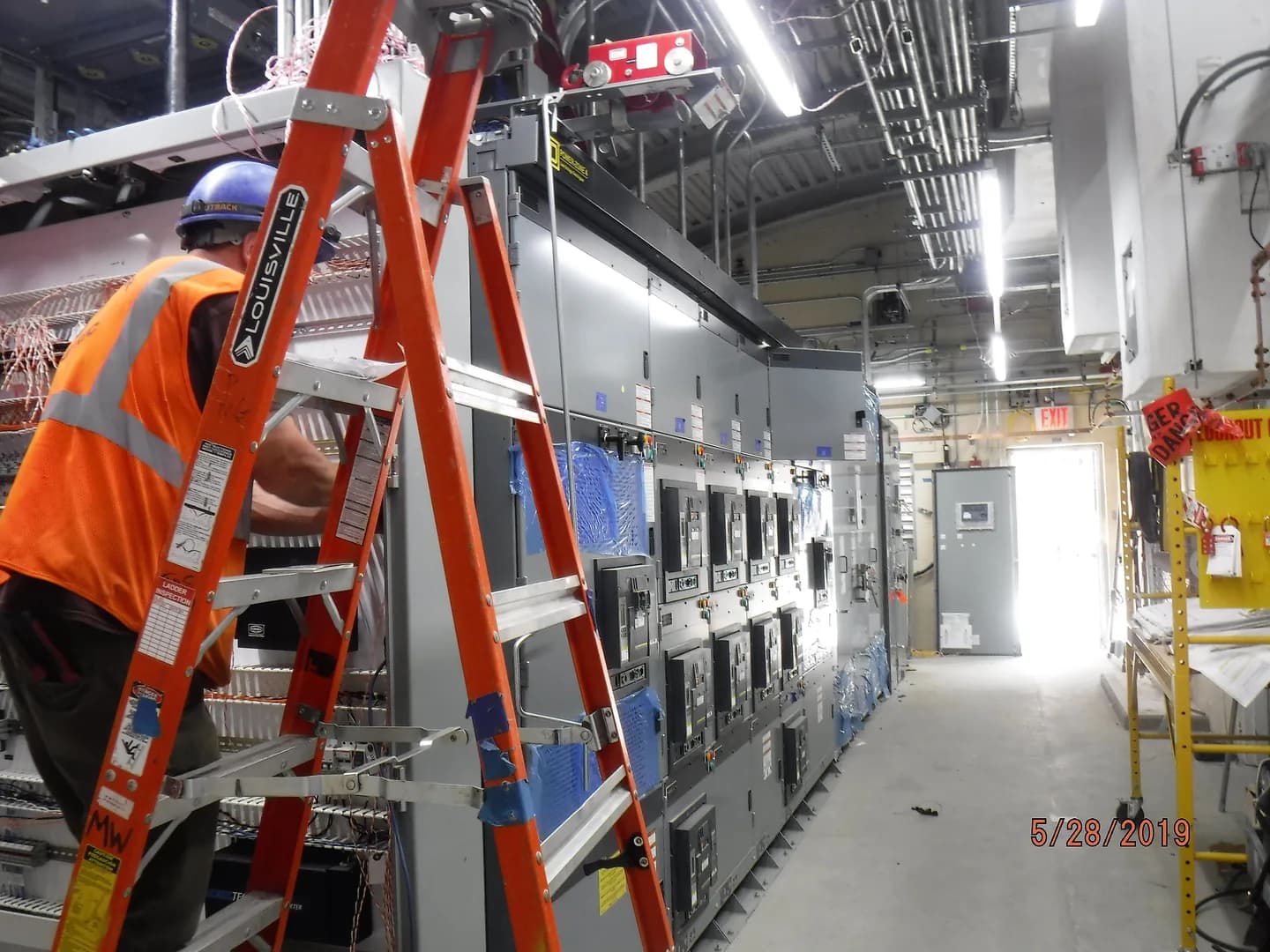
A substation automation system, also called SAS in many projects, can bring together:
- acquisition of states, quantities, and alarms;
- local and remote commands;
- interlocks and sequences;
- chronological event recording;
- supervision through HMI/SCADA;
- communication with operation centers;
- integration of protection relays, controllers, and auxiliary systems;
- time synchronization;
- storage of events, historical data, and diagnostics;
- engineering, maintenance, and configuration management.
Not all functions need to be centralized. Critical protection and interlocks can remain distributed across the IEDs; supervision can be redundant; communication with the center can go through gateways; and legacy equipment can remain connected through contacts or different protocols. The appropriate architecture arises from the operational requirements, the risk, and the life cycle — not from an isolated preference for technology.
To understand the chain that detects electrical conditions and produces protection operations, see the substation protection and control guide .
The journey of data — and the return path of a command
A value on the screen looks simple: “breaker open”, “current of 412 A”, “protection operated”. But before it reaches the operator, this information travels through a physical and logical chain.
Consider the position of a circuit breaker. Auxiliary contacts represent its state. The information is acquired by an input, interpreted by an IED or controller, and associated with a model. The device assigns state, quality, and time. The network transports the update. The server or gateway processes and distributes the point. The HMI presents the result. If there is remote integration, the operation center also receives it.
The visible value is only the last step. To trust it, engineering needs to answer:
- what is the origin of the data?
- is the state single or does it use double indication?
- is the value valid, stale, blocked, substituted, or in test?
- which device generated the timestamp?
- was this equipment’s clock synchronized?
- what happens if a contact becomes inconsistent?
- how does the system record a change during a communication failure?
A command travels in the opposite direction, but requires additional safeguards. An opening or closing command may involve:
- 1.identification of the user and the command origin;
- 2.definition of authority — local, station, or remote;
- 3.object selection and operation confirmation, according to the adopted model;
- 4.verification of blocks, permissives, and interlocks;
- 5.transmission to the responsible device;
- 6.activation of the output circuit;
- 7.time supervision and position feedback;
- 8.logging the attempt, its outcome, and any failures.
Not every project uses the same command model. What matters is that the sequence is specified, applied consistently, and tested end to end.
- Primary equipment
- Process interface
- IED / bay controller
- Station network
- SCADA / gateway
- Operation center
- Control center / operator
- Authority
- Selection / validation
- Interlock
- Execution
- Position feedback
The minimum context package
A piece of operational information should be treated as something larger than an isolated value:
| Element | Question it answers |
|---|---|
| Value or state | What is happening? |
| Identification / origin | At which device and data point? |
| Quality | Can I trust this data right now? |
| Timestamp | When did the condition occur? |
| Cause or context | Was it spontaneous, commanded, blocked, or placed in test? |
Without these elements, the system can remain “online” and still lead to a wrong interpretation.
The four layers of the architecture
Dividing automation into layers helps to locate functions, interfaces, and responsibilities. The boundaries are not rigid, but the model is useful for specification and fault analysis.
Process level
Sensors, CTs and VTs, circuit breakers, disconnectors, and interface units. It is the point where automation meets the electrical system — and where an error of polarity, ratio, wiring, mapping, time, or operation can turn into incorrect information or improper operation.
Bay level
Protection IEDs, bay controllers, meters, recorders, and local logic associated with a functional position. It brings together acquisition, metering, protection, interlocking, sequences, command execution, and diagnostics concentration.
Station level
Network, automation and SCADA servers, operation and engineering workstations, gateways, synchronism, historical data, alarms, and event logging. It is the local coordination layer, where much of the data gains a consolidated operational representation.
Operation level
Local or remote control centers, authorized corporate systems, and controlled remote-access channels. It must not be confused with unrestricted access to the station network: it requires limits, responsibilities, monitoring, and security criteria.
The boundaries are not rigid: critical protection and interlocks can remain distributed across the IEDs, supervision can be redundant, and legacy equipment can remain connected through contacts or different protocols. The diagram does not represent a specific vendor or product.
Process level
This is where automation meets the electrical system. It includes circuit breakers, disconnectors, transformers, sensors, CTs and VTs, contacts, actuators, and, when adopted, process interface units or merging units. In conventional architectures, currents, voltages, and states reach the panels through copper cables. In process-bus architectures, part of these quantities and states can be digitized closer to the primary equipment and transported over the network.
The process level is not “just the field”. It is the point where an error of polarity, ratio, wiring, mapping, time, or operation can turn into incorrect information or improper operation.
Bay level
It brings together devices associated with a functional position of the substation: protection relays, bay controllers, meters, recorders, and local logic. At this level there can be acquisition and validation of states, metering, protection, interlocking, local sequences, command execution, publishing and subscribing of messages, and concentration of the equipment’s own diagnostics.
Distributing functions by bay can reduce dependence on a central server, but it requires consistency between devices, files, and versions.
Station level
It is the local coordination layer. It can include automation and SCADA servers, operation and engineering workstations, telecontrol gateways, switches and network infrastructure, synchronism services, historical data, alarms, and event logging, in addition to controllers for functions common to the substation. It is at this level that much of the data gains a consolidated operational representation — and where inconsistencies in naming, alarm priority, screens, permissions, and communication become most visible.
Operation level
It includes local or remote control centers, authorized corporate systems, analysis applications, and controlled remote-access channels. Communication can use protocols and gateways defined by the utility or the project. The operation level must not be confused with unrestricted access to the station network. Integration requires clearly defined limits, responsibilities, monitoring, and security criteria.
Who does what within the system
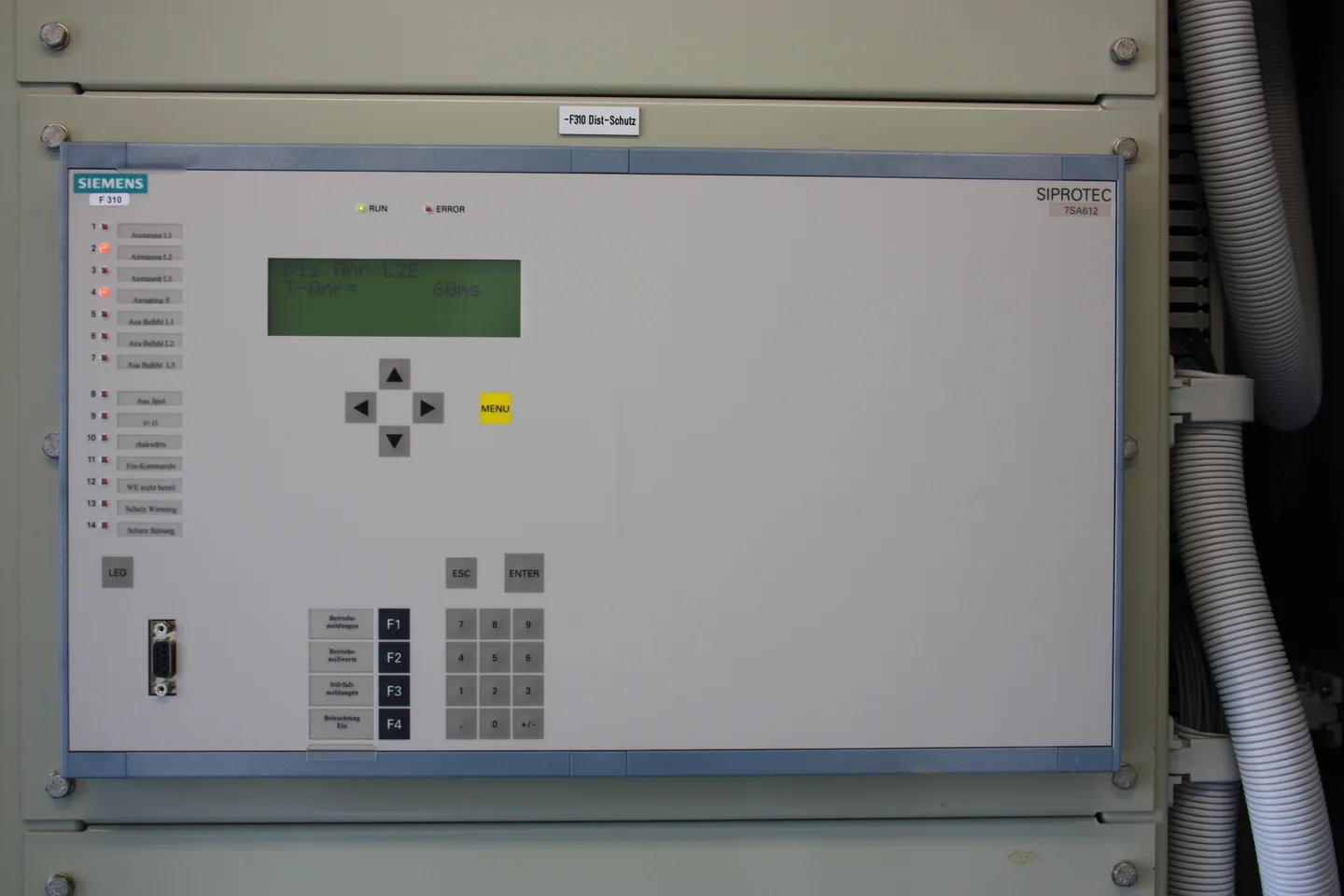
Terms such as IED, RTU, gateway, and SCADA sometimes appear as if they were equivalent. They are not. The exact function varies by project, but the separation below helps to build a consistent scope.
| Component | Typical role | Engineering question |
|---|---|---|
| Protection IED | measures, performs protection functions, records, and can control | Which functions remain autonomous during loss of the station? |
| Bay controller | acquisition, command, interlocking, and sequences of the bay | Where does authority reside and how are inconsistent states handled? |
| RTU | acquisition, concentration, and telecontrol | Which points, times, qualities, and commands are made available? |
| Gateway | conversion, concentration, and boundary between systems/protocols | How to avoid loss of meaning and trace each mapping? |
| SCADA server | processes data, alarms, events, historical data, and commands | What happens if the primary server is lost? |
| HMI | presents the process and receives operator actions | Does the screen reveal quality, authority, and the consequence of the action? |
| Managed switch | forwards traffic and applies network features | Were the configuration, supervision, and redundancy documented and tested? |
| Time source | distributes time reference | What accuracy do the functions really require and how is the loss indicated? |
| Engineering workstation | configures, diagnoses, and maintains devices/system | How are access, versions, backups, and changes controlled? |
| Operation center | remote supervision and control of installations | Which responsibilities belong to the substation and which to the center? |
A single piece of equipment can accumulate roles. This does not remove the need to describe them. When different functions reside in the same device, a common failure can affect all of them; when they are distributed, dependencies on network, time, and coordination arise.
The functional inventory comes before the catalog
Selecting equipment without consolidating functions usually produces gaps or overlap. Before choosing models, it is best to map:
- data to be acquired;
- permitted commands and command sources;
- logic and interlocks;
- events requiring a timestamp at the source;
- availability and degraded operating modes;
- interfaces with protection, metering, auxiliary services, and telecommunications;
- operation center requirements;
- maintenance, access, and recovery;
- future expansion.
Control, authority, and interlocks
The most dangerous command is the one that reaches the correct equipment without the system having verified the correct context. A control architecture must make clear:
- who can issue commands;
- where commands can be issued from;
- which command source has priority;
- how the transfer between local, station, and remote occurs;
- which permissives and interlocks are evaluated;
- how maintenance blocks are applied and presented;
- how execution and feedback are supervised;
- what is recorded for later analysis.
Local, station, and remote
“Local/remote” cannot be just a label on the HMI. The position of selector switches, equipment states, user permissions, and internal logic must result in an unambiguous authority model.
If two sources can act simultaneously without a defined rule, automation creates conflict instead of coordination. If the transfer of authority is not recorded, the investigation of an event loses context.
An interlock is not just a screen message
An interlock prevents or conditions an operation based on the state of the process. Its implementation can be electrical, logical, mechanical, or a combination. The choice depends on criticality, requirements, and the project’s philosophy. For each command, document:
- permissive conditions;
- blocking conditions;
- the source of each state used;
- behavior in the face of invalid data or lost communication;
- possibility and governance of bypass;
- the message shown to the operator;
- evidence recorded in the event;
- positive and negative tests.
Testing only the “happy path” proves little. It is necessary to verify the block when a condition is not met, when a data point is invalid, and when a dependency disappears.
Confirmation and feedback
Issuing an output does not mean the equipment changed position. Automation must distinguish, where applicable: command accepted; command sent; output activated; movement started; final position reached; time exceeded; inconsistent position; circuit failure or unavailability. This distinction reduces ambiguity for operation and improves field diagnostics.
SCADA: more than screens and symbols
SCADA turns distributed data into an operational view. Its quality depends as much on screen design as on the engineering behind it. Functions can include acquisition, processing, alarms, events, historical data, commands, calculations, reports, data exchange, and supervision of the infrastructure itself. In installations subject to ONS requirements, the applicable scope must be verified directly in the Grid Procedures and in the project documents.
Data quality
A value needs to indicate when it should not be interpreted as normal. Depending on the system and protocol, the quality can reflect situations such as:
- invalid data;
- interrupted communication;
- stale value;
- blocked point;
- substituted value;
- point under test;
- overflow or out-of-range value;
- unsynchronized origin.
Hiding quality or indiscriminately converting it to “zero” creates false certainty. On the HMI, invalid states must be perceptible without visually competing with real alarms.
Events, alarms, and SOE
An event is a recorded change. An alarm is a condition that requires attention or a response from the operator. Not every event should become an alarm. A good alarm design seeks to avoid:
- alarm floods that obscure the initial cause;
- duplicate messages for the same condition;
- permanent alarms with no possible action;
- priorities defined solely by equipment category;
- vague text, with no indication of the condition or consequence;
- absence of acknowledgment and clearing records.
The sequence-of-events record, often called SOE, helps to reconstruct the order of an event. Its usefulness depends on the timestamp at the source, synchronism, time resolution, and preservation during communication outages.
A situation-oriented HMI
The screen must help the operator perceive the state and act safely. This means:
- clear hierarchy between overview and detail;
- restrained use of color;
- emphasis reserved for anomalies and states that require attention;
- presentation of authority, blocks, and quality;
- consistent navigation;
- names that match the documentation and the operation center;
- confirmation appropriate to the consequence of the command.
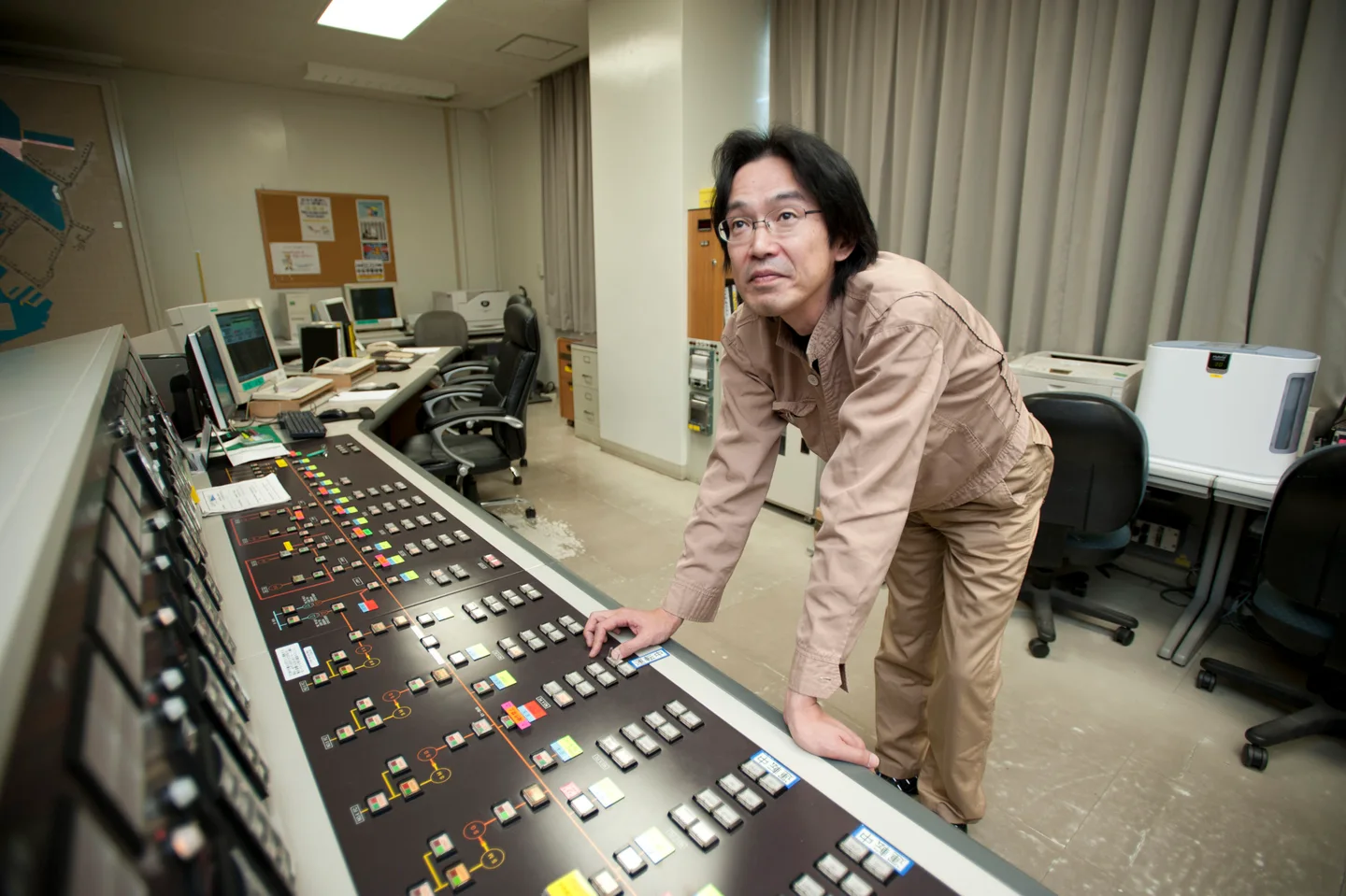
A visually sophisticated screen, but without quality, origin, or block information, is still an incomplete interface.
Protocols: each solves part of the problem
There is no “best protocol” apart from the use case. The design must define which information needs to flow, between which participants, and with what performance, semantics, availability, and security.
| Technology | Typical use | Main focus |
|---|---|---|
| IEC 61850 MMS | client-server communication, reports, data, and controls in the station environment | data model, datasets, reports, quality, and command behavior |
| IEC 61850 GOOSE | fast exchange of events and states between devices via publish/subscribe | message matrix, performance, supervision, VLAN/priority, and loss/recovery tests |
| IEC 61850 Sampled Values | publishing of current and voltage samples, especially on the process bus | time synchronization, network performance, stream engineering, and degraded behavior |
| IEC 60870-5-104 | telecontrol over IP networks, common in integration with operation centers | mapping, causes of transmission, quality, commands, times, and channel availability |
| DNP3 / IEEE 1815 | telecontrol and integration between RTUs, IEDs, and master systems | classes/events, variations, timestamps, quality, controls, and applied profile |
| Modbus | integration of equipment and auxiliary systems with a register model | documented semantics, scale, polling, quality, and equipment limitations |
| Physical contacts | hardwired states and operations | circuit supervision, number of cables, documentation, and physical tests |
GOOSE
Station / process busFast events and states between functions and IEDs, via publish/subscribe.
MMS
Station environmentData, reports, commands, and client-server services of IEC 61850.
Sampled Values
Process busCurrent and voltage samples close to the primary equipment, when adopted.
IEC 60870-5-104
Integration with the centerTelecontrol over IP networks, according to the project standard.
DNP3 / IEEE 1815
Telecontrol and RTUsIntegration between RTUs, IEDs, and master systems, according to the applied profile.
Modbus
Auxiliary systemsIntegration of equipment and auxiliary services through a register model.
Physical contacts
Hardwired interfacesStates and operations that can remain due to requirement, legacy, or segregation.
MMS, GOOSE, and Sampled Values are not synonyms
In IEC 61850, different services meet different needs. MMS is associated with client-server communication and structured access to data and services. GOOSE uses publish/subscribe to distribute events and states with performance suited to fast functions, as defined by engineering. Sampled Values publishes samples of electrical quantities and is tied to the use of a process bus.
An installation can use MMS and GOOSE without adopting Sampled Values. It can also integrate legacy equipment through other protocols. Saying that a substation “has IEC 61850” does not yet describe its architecture.
Protocol conversion is not automatic conversion of meaning
A gateway can transform representations, but engineering needs to decide:
- how the point is named;
- which unit and scale will be used;
- how states and quality attributes correspond;
- which timestamp will be preserved;
- how spontaneous events are handled;
- how commands and feedback are mapped;
- what will happen when one side loses communication.
When this equivalence table is not controlled, the integration becomes dependent on the tacit knowledge of whoever configured it.
IEC 61850: model, services, and engineering
Treating IEC 61850 as merely “another Ethernet protocol” hides an important part of its value. The series establishes a common structure to represent functions and data of the electrical domain, communication services, and a system configuration language.
Semantics before the address
In traditional integrations, much of the meaning resides in external lists of registers or points. In IEC 61850, data is organized into standardized models, with classes and attributes that help tools and systems understand what is being represented. This does not remove the engineering. It increases the possibility of consistency — provided that naming, model extensions, datasets, controls, and files are treated as system deliverables.
SCL: the system described in files
The SCL language, defined in IEC 61850-6, allows describing IED capabilities, functions, topology, and communication configuration for exchange between tools. Files found in the engineering cycle include, depending on the edition, tool, and adopted process:
- ICD: IED capability description;
- SSD: system specification;
- SCD: configured description of the substation as a whole;
- CID: configuration intended for an IED;
- IID: instantiated description of an IED for engineering exchange.
The SCD file deserves special attention because it coordinates relationships between multiple participants. It should not exist only as an occasional export. It is necessary to define its official source, owner, version, validation, and update process.
Interoperability must be demonstrated
Standard conformance and declared service support are important foundations, but they do not replace application validation. Differences in edition, model, interpretation, options, tools, and behavior can affect the integration. A multi-brand FAT must verify, among other things:
- SCL import and export;
- association and client-server communication;
- datasets and report control blocks;
- GOOSE publications and subscriptions;
- quality and time attributes;
- command models;
- restart and reconnection;
- diagnostics and communication alarms;
- behavior after a configuration change.
Station bus and process bus
The station bus connects devices and systems at the bay and station levels. The process bus brings digitalization and communication closer to the primary equipment, and can transport states, commands, and sampled values.
A process bus can reduce wiring and expand supervision possibilities, but it also changes the nature of the dependencies. Network, synchronism, configuration, testing, and maintenance become even more decisive. The decision must consider the full life cycle, the available competence, and the expected behavior under faults — not just the reduction of cables.
Networks, topologies, and redundancy
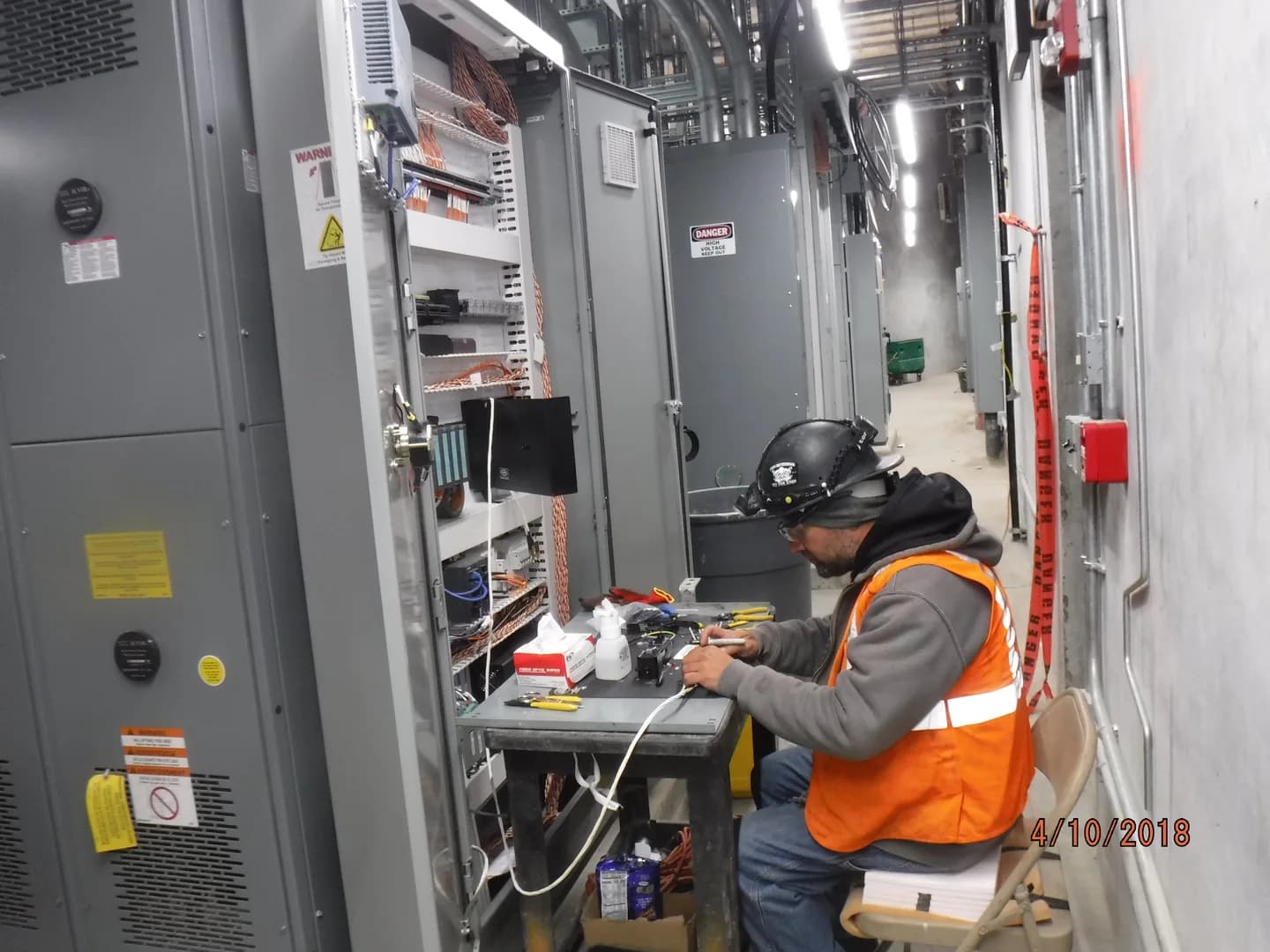
The automation network is a functional part of the system. Its design must consider traffic, latency, availability, maintenance, segregation, expansion, and diagnostics.
Star
Devices connected to central or access switches. A clear architecture that is easy to segment; availability depends on how switches, uplinks, power sources, and paths are distributed.
Ring
With recovery protocols, there is an alternative path after certain failures. The recovery time and the effect on the functions depend on the protocol, the configuration, and the size of the network.
PRP
Two independent LANs receive the same frames; the destination accepts the first and discards the duplicate. Defined in IEC 62439-3.
HSR
Frames sent in both directions of a ring; nodes process the first one received and handle duplicates. Defined in IEC 62439-3.
Star and ring
In a star topology, devices connect to central or access switches. The architecture is clear and can be easily segmented, but availability depends on how switches, uplinks, power sources, and paths are distributed. In rings with recovery protocols, there is an alternative path after certain failures. The recovery time and the effect on the functions depend on the protocol, the configuration, the size of the network, and the equipment. Do not assume instantaneous recovery without measurement.
PRP and HSR
PRP and HSR, defined in IEC 62439-3, are high-availability redundancy mechanisms. Under conditions and failures foreseen by the design, they can offer switchover with no recovery time perceived by the protected traffic.
- PRP: sends frames over two independent LANs; the destination accepts the first and discards the duplicate.
- HSR: sends frames in both directions of a ring; nodes process the first one received and handle duplicates.
This does not make the entire installation immune to failures. If the two networks share a power source, physical route, incorrect configuration, or another common point, the benefit can be reduced. Servers, gateways, clocks, switches, IEDs, and final circuits must be analyzed within the architecture.
VLAN, priority, and multicast
Logical segmentation and prioritization help to control domains and traffic. In IEC 61850 environments, multicast messages require conscious configuration and supervision. VLAN and priority do not compensate for a network without a traffic budget, documentation, or diagnostics. The network design must record at least:
- physical and logical topology;
- ports, links, and speeds;
- addresses and networks;
- VLANs and priorities;
- multicast and subscriptions;
- redundancy and failure modes;
- sources and power supply of the equipment;
- supervision, logs, and maintenance access;
- current capacity and reserve for expansion;
- as-built configurations.
Time: the invisible infrastructure of analysis
Misaligned clocks can make a correct sequence appear contradictory. In distributed systems, time influences events, oscillography, sampled values, correlation between devices, and event investigation. The design must define:
- which functions need synchronism;
- what accuracy each function requires;
- what the reference source is;
- how time is distributed;
- which devices act as master, transparent clock, or client;
- how loss, degradation, or a time jump is indicated;
- how long each piece of equipment maintains accuracy without a reference;
- how synchronism is tested end to end.
Common technologies include NTP, IRIG-B, and PTP. NTP serves many general functions, but it should not be assumed to be a solution for high-accuracy requirements. IRIG-B remains present in conventional architectures. PTP, including the IEC/IEEE 61850-9-3 profile, serves precise synchronism applications in automation networks, when the entire chain is compatible and correctly designed. GPS or another GNSS source can provide the primary reference, but the antenna alone does not solve distribution, redundancy, supervision, and holdover behavior.
An often-overlooked test
Deliberately disconnecting the time source during commissioning helps to verify which alarms appear, which devices remain synchronized and for how long, how the time quality changes, how recovery occurs, and whether jumps or incoherent sequences appear.
Conventional, automated, and digital: what is the difference?
The terms describe architecture choices and degree of integration. They do not represent an automatic scale of reliability.
| Aspect | Conventional | Automated | Digital |
|---|---|---|---|
| Acquisition | predominance of hardwired signals and measurements | IEDs and integrated systems, with combinations of wiring and network | greater digitalization close to the process |
| Communications | concentrated data points and multiple protocols | station network and integration between devices/systems | expanded use of digital models and services, including in the process when applicable |
| Control | panels, switches, and hardwired logic | local/remote control coordinated by devices and SCADA | functions distributed and digitally integrated |
| Engineering | primarily document-based diagrams and lists | configuration of devices, databases, and gateways | strong dependence on models, files, network, time, and integrated management |
| Testing | continuity, injection, command, and physical signals | physical tests + communication and end to end | physical, logical, network, time, message, and integrated-simulation tests |
| Main challenge | volume of wiring and diagnostics | consistency between multiple systems | governance of data, configuration, interoperability, and life cycle |
- Predominance of hardwired signals and measurements.
- Concentrated data points and multiple protocols.
- Panels, switches, and hardwired logic.
- Main challenge: volume of wiring and diagnostics.
- Integrated IEDs and systems, with cabling and network infrastructure.
- Station network and integration between devices.
- Local and remote control coordinated by SCADA.
- Main challenge: consistency between multiple systems.
- Greater digitalization close to the process.
- Expanded use of digital models and services.
- Functions distributed and digitally integrated.
- Main challenge: governance of data, configuration, and life cycle.
A well-designed and well-maintained conventional architecture can be more reliable than a poorly specified digital architecture. Likewise, a mature digital solution can increase observability, flexibility, and standardization. The benefit comes from fitness to the requirement and from the execution of the engineering.
Digitalization does not have to happen all at once
Retrofit projects may be implemented in stages:
- integrate existing IEDs into the SCADA;
- replace the RTU or gateway while retaining some hardwired signals;
- modernize one bay at a time;
- introduce IEC 61850 on the station bus;
- prepare the network and synchronism for future expansions;
- keep physical interfaces where the transition or the requirement justify it.
A hybrid architecture is not necessarily improvised. It can be a planned stage — provided that interfaces, limitations, and final condition are documented.
Cybersecurity: part of the architecture, not a later layer
Automation increases connectivity and dependence on software. This requires defense in depth and governance throughout the life cycle. Controls to consider, according to risk and project requirements:
- segmentation between zones and authorized flows;
- least privilege and individual accounts;
- authentication and credential management;
- controlled remote access, temporary when appropriate, and auditable;
- hardening of servers, workstations, switches, and IEDs;
- inventory of assets, firmware, software, and versions;
- vulnerability and update management compatible with availability;
- verified backups and rehearsed restoration;
- protection and traceability of configuration files;
- logs, monitoring, and incident response;
- control of removable media and engineering workstations;
- management of vendors and remote support.
The IEC 62351 series addresses security of communications and data in power-sector protocols, including parts related to IEC 61850. It is an important reference, but it does not replace network architecture, processes, people, and operational controls.
Availability and security need to be reconciled
Indiscriminately updating a critical system can introduce unavailability. Leaving software vulnerable indefinitely is also a risk. Engineering needs to combine impact assessment, homologation, window, rollback, and test evidence. Likewise, an “emergency” remote access without traceability can become permanent. Every exception needs an owner, a deadline, and a closing condition.
Automation retrofit: modernize without losing the existing system
In operating installations, the challenge is rarely to design only the future architecture. It is to understand what exists, define transition states, and carry out the change without creating hidden risks.
The actual as-is condition
Old documents are a starting point, not proof of the current state. The survey must confront drawings and field:
- equipment and versions in service;
- data points actually connected;
- active logic and interlocks;
- command sources;
- protocols, converters, and links;
- time synchronization;
- addressing and topology;
- screens, alarms, and historical data;
- interfaces with protection and auxiliary services;
- changes not reflected in the documentation;
- available parts, licenses, tools, and knowledge.
Do not replicate the error in a new format
Migrating an old point list without validating names, quality, alarms, and usefulness only transfers liabilities to the new platform. The retrofit is an opportunity to rationalize:
- duplicate or unused data points;
- alarms with no action;
- inconsistent scales and units;
- different wording in field devices, HMI, and the control center;
- commands without adequate feedback;
- logic without a functional narrative;
- dependencies on obsolete equipment.
Transition states
Between the current system and the future one there is a period in which new and old parts need to coexist. Engineering must explicitly represent:
- architecture for each stage;
- available and unavailable functions;
- temporary paths for data and commands;
- operational responsibility;
- blocks and provisional measures;
- tests before, during, and after cutover;
- criteria for aborting and rolling back;
- maximum duration of the temporary condition.
Possible strategies
- migration by bay;
- replacement by layer — network, servers, gateway, or field;
- controlled parallel operation;
- temporary gateway between legacy and future;
- a concentrated cutover window;
- deployment of common infrastructure before the final devices.
There is no universal strategy. Required availability, access to the process, existing documentation, testing capacity, and the risk of each transition guide the choice.
Signs that a retrofit deserves evaluation
- recurring failures or insufficient diagnostics;
- equipment without support, parts, or tools;
- knowledge concentrated in only a few people;
- changes impossible to test outside the installation;
- events without a reliable time sequence;
- incompatibility with new centers or standards;
- networks without segregation, supervision, or documentation;
- servers and operating systems outside their support lifecycle;
- divergence between drawings, database, and field;
- expansion blocked by the limits of the architecture.
These signs do not by themselves determine replacement. They indicate the need for a structured technical diagnosis.
Engineering: the system must exist before it is configured
Configuring too early usually turns architecture decisions into parameters scattered across the tools. Engineering must establish a source of truth and a sequence of deliverables.
- 01
Requirements
Functional, operational, and availability requirements.
- 02
Architecture
System architecture and failure criteria.
- 03
Data and logic
Inventory of functions, data, commands, and interlocks.
- 04
Configuration
IEDs, servers, gateways, switches, and HMI.
- 05
FAT
Individual and integrated validation at the factory.
- 06
Integration / SAT
Validation of the actual installation on site.
- 07
Commissioning
End-to-end tests and entry into operation.
- 08
As-built and changes
Documentation, backups, and change management in operation.
Lessons, pending items, and corrections found in the FAT, the SAT, and commissioning return to the earlier deliverables — requirements, architecture, data, and configuration. The cycle is iterative, not a straight line from requirement to energization.
From requirement to configuration
A robust process includes:
- 1.functional, operational, and availability requirements;
- 2.architecture and failure criteria;
- 3.inventory of functions, data, and commands;
- 4.control philosophy, authority, and interlocks;
- 5.network and time-synchronization engineering;
- 6.data model, point lists, and interfaces;
- 7.configuration of IEDs, servers, gateways, switches, and HMI;
- 8.progressive and integrated testing;
- 9.as-built documentation, backups, and training;
- 10.change management during operation.
Deliverables that cannot disappear inside the tools
- functional and physical architecture;
- network and power diagrams;
- point and I/O list;
- command and authority matrix;
- logic and interlocking narratives;
- cause-and-effect matrix;
- addressing, VLANs, ports, and multicast;
- data model and protocol mappings;
- datasets, reports, and GOOSE messages;
- SCL files and native configurations;
- screens and alarm philosophy;
- timing requirements;
- test procedures and cases;
- records of results and pending items;
- migration and rollback plan;
- tested backups;
- as-built documentation and version records.
The authoritative source
Complex projects fail silently when divergent copies of the same file exist. Define:
- which repository contains the valid version;
- who may make changes;
- how a change is requested, reviewed, tested, and approved;
- how versions installed in the field are identified;
- how to recover the previous configuration;
- how to ensure documents and files match.
FAT, SAT, and commissioning: testing relationships, not just parts
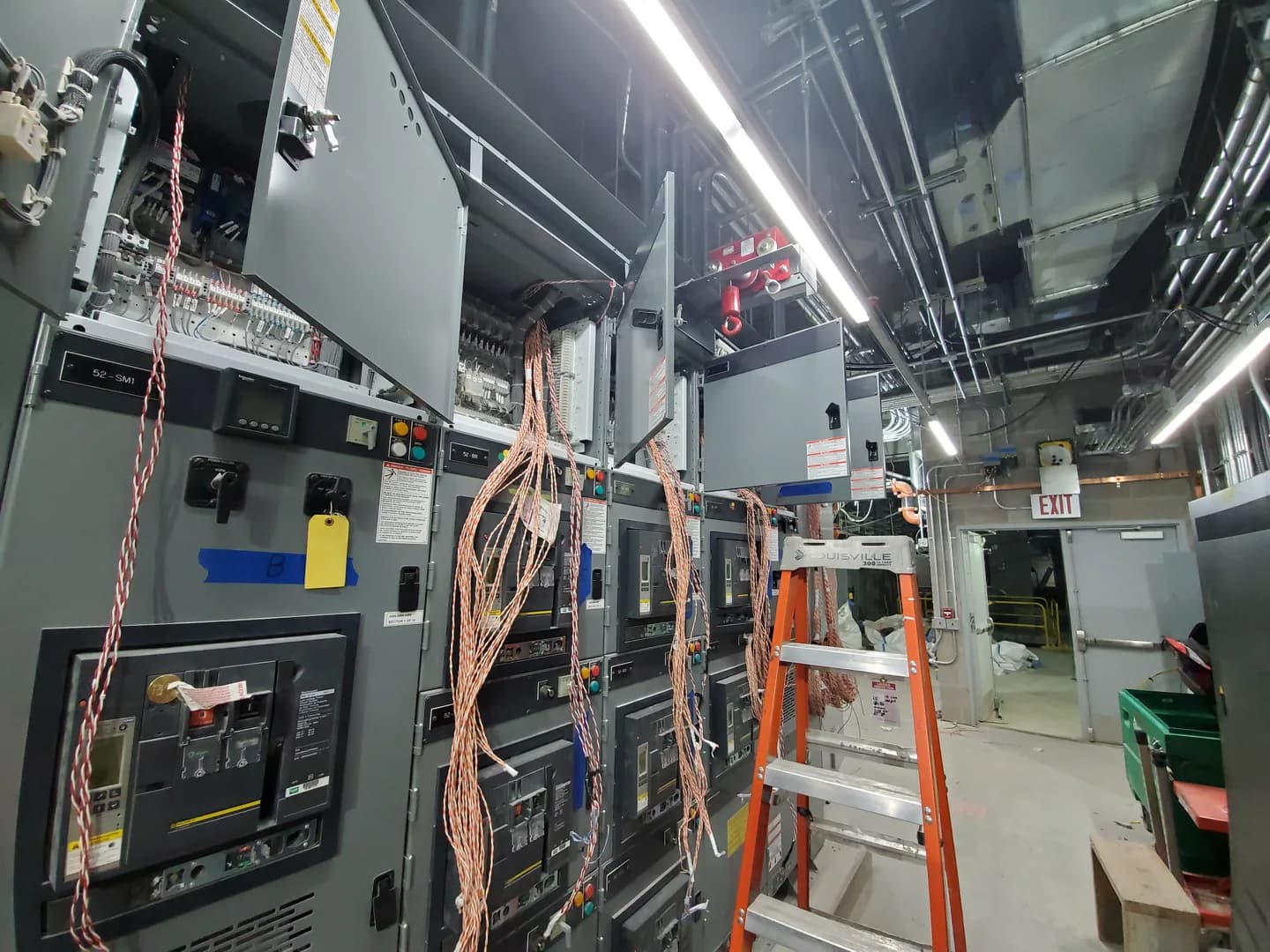
An IED can pass an individual test and still fail as a participant in the system. The greater the integration, the more necessary it becomes to test relationships between devices, networks, servers, time, operation center, and process.
FAT — Factory Acceptance Test
FAT should be performed in an environment sufficiently representative to anticipate problems before field deployment. Depending on the scope, verify:
- configuration and versions;
- points, states, scales, units, and quality;
- commands, permissives, and interlocks;
- events and timestamps;
- screens, alarms, and historical data;
- communication between devices and systems;
- GOOSE, MMS, reports, and SCL files;
- integration via IEC 104, DNP3, Modbus, or applicable interfaces;
- server and network redundancy;
- link loss and restoration;
- time-source loss and restoration;
- cold and warm restart;
- backups and restoration;
- performance under representative scenarios;
- list of pending items, owners, and closing criteria.
The FAT does not fully reproduce the field. Simulation limitations must be recorded and converted into mandatory SAT or commissioning cases.
SAT — Site Acceptance Test
On site, validate the actual installation:
- correspondence between equipment, drawing, and configuration;
- cabling, ports, fibers, and routes;
- power supply, grounding, and redundancies;
- integration with primary equipment;
- point-to-point acquisition and command;
- operation, feedback, and supervision of circuits;
- actual communication with the operation center;
- distributed synchronism;
- failover with the final topology;
- recovery after power loss or restart;
- access, profiles, and audit trails;
- degraded-mode operating procedure.
End-to-end testing
The end-to-end test follows a complete function. Examples:
- change a real or simulated field state and confirm its value, quality, time, alarm, and record at the control center;
- issue an authorized command and verify selection, interlocking, output, final position, and record;
- interrupt a link and confirm the expected continuity, alarms, reconnection, and absence of misleading states;
- lose synchronism and verify indication, holdover, and recovery;
- restore a backup in a controlled environment and prove that it is usable.
Measurable acceptance criteria
“Communication OK” is not a sufficient criterion. Each case must contain:
- initial condition;
- stimulus;
- expected result;
- applicable tolerance or time;
- evidence;
- owner;
- actual result;
- deviation and corrective action.
A communication path of the automation network is interrupted.
The three questions the design needs to answer
- What continues operating locally?
- How is the condition signaled and recorded?
- What is the recovery path validated in testing?
Operation and maintenance: delivery does not end at energization
After entering operation, automation keeps changing. There are replacements, updates, new points, screen revisions, bay expansions, equipment changes, and changes at the control center. Without life-cycle management, the as-built loses validity and the next diagnosis starts over from scratch.
Recommended minimum routine
- up-to-date inventory of hardware, firmware, software, and licenses;
- monitoring of network, servers, synchronism, and communications;
- analysis of recurring alarms and infrastructure events;
- periodic backups with restoration testing;
- review of accounts and access;
- controlled assessment of patches and vulnerabilities;
- recording of every change of logic, point, screen, or configuration;
- comparison between the approved and the installed version;
- tests after changes;
- training and degraded-condition drills;
- preservation of tools, cables, adapters, and environments needed for maintenance.
Useful indicators
- availability of functions, not just of equipment;
- failures and communication losses by origin;
- devices out of synchronization;
- most frequent alarms and time to response;
- number of invalid or forced points;
- changes pending as-built;
- backup and restoration success;
- recovery time in rehearsed failures;
- obsolescence and support per asset.
Checklist for specifying or reviewing an SAS
Use the questions below as an initial guide. They do not replace the analysis of the project.
Specification checklist
Checklist for specifying or reviewing a substation automation system
POWER — Substation Protection, Control, and Automation · bepower.com.br
Frequently asked questions
Are substation automation and SCADA the same thing?
No. SCADA is one part of automation, focused on acquisition, processing, supervision, alarms, events, historical data, and controls. Automation also involves process interfaces, IEDs, controllers, networks, time, logic, interlocks, gateways, engineering, and procedures.
What does SAS mean in a substation?
SAS is an acronym for Substation Automation System. The exact scope varies: in some projects it covers IEDs, network, servers, HMI, gateway, and synchronism; in others, the term is used more narrowly. The contract and the architecture need to make the boundaries explicit.
Is IEC 61850 a protocol?
It is broader than that. The IEC 61850 series includes data models, communication services, mappings, and a system configuration language. MMS, GOOSE, and Sampled Values serve distinct functions within this ecosystem.
What is the difference between GOOSE and MMS?
GOOSE is associated with publish/subscribe distribution of events and states between participants, including for fast functions when the design so defines. MMS is associated with client-server communication, data reading, reports, commands, and other services. They can coexist in the same system.
Does every IEC 61850 automation use a process bus?
No. Many installations use IEC 61850 on the station bus and keep currents, voltages, states, and operations hardwired. A process bus is an additional architecture choice and requires its own network, time, testing, and maintenance engineering.
Do PRP or HSR eliminate any interruption?
They provide redundancy mechanisms for communication in defined scenarios, but they do not eliminate all the system’s points of failure. Power sources, common routes, servers, gateways, clocks, devices, and final circuits must also be analyzed and tested.
Which protocol should connect the substation to the operation center?
It depends on the standard of the utility and the project. IEC 60870-5-104 and DNP3/IEEE 1815 are frequent examples. The protocol alone does not define the quality of the integration: point list, events, quality, time, commands, availability, and cybersecurity need to be specified.
What should be tested beyond the supervision points?
Commands, authority, interlocks, quality, timestamps, alarms, SOE, redundancy, loss of time, loss of server, restart, reconnection, degraded behavior, communication with the center, and restoration of backups. Negative tests are as important as normal operation.
When to modernize the existing automation?
When operational risk, obsolescence, lack of support, insufficient diagnostics, documentation inconsistency, expansion limitations, or incompatibility with new requirements exceed the safe capacity for maintenance. The decision must start from an as-is diagnosis and a risk analysis, not just from the age of the equipment.
Is it possible to modernize in stages?
Yes. Migration by bay, by layer, or with temporary coexistence can reduce operational impact. However, each transition state needs its own architecture, tests, responsibilities, blocks, and rollback.
What is the main deliverable of an IEC 61850 project?
There is no single sufficient file. The system needs architecture, requirements, models, lists, logic, SCL files, native configurations, network documentation, test cases and evidence, backups, and a coherent as-built. The value lies in the consistency of the whole.
Coherence is what turns equipment into a system
An automated substation is a distributed system applied to a critical electrical process. Its performance does not depend only on the speed of the network, the brand of the IED, or the appearance of the HMI. It depends on the coherence between what the field reports, what the devices interpret, what the network transports, what SCADA presents, what the operator can command, and what remains available when something fails.
This coherence is built through engineering: clear requirements, defined responsibilities, data with semantics and quality, reliable time, network architecture, controlled configurations, end-to-end tests, and documentation that remains valid after energization.
When these disciplines come together, automation ceases to be a set of connected equipment and begins to fulfill its role: expanding observability, reducing ambiguity, supporting decisions, and operating the system with predictability.
Essential glossary
Bay
Functional position of the substation associated, for example, with a line, transformer, feeder, busbar, or coupling.
Gateway
Equipment or software that concentrates, forwards, or converts information between systems and protocols.
GOOSE
IEC 61850 publish/subscribe service for distributing events and states between participants.
HSR
Ring redundancy protocol with transmission in both directions, defined in IEC 62439-3.
IED
Intelligent electronic device that performs functions such as protection, control, metering, acquisition, or recording.
HMI
Human-machine interface used to present the process and receive operator actions.
MMS
Set of client-server services/mapping used in the IEC 61850 ecosystem for access to data, reports, and controls.
PRP
Redundancy protocol with two parallel LANs, defined in IEC 62439-3.
SAS
Substation automation system.
SCL
IEC 61850 substation configuration language, used to describe the system’s capabilities, functions, and communication.
SCADA
Supervisory control and data acquisition system.
SOE
Sequence of events recorded with a time reference to support the analysis of occurrences.
Sampled Values
Service/mapping for publishing sampled values, such as currents and voltages, in applicable architectures.
RTU
Remote terminal unit that acquires, concentrates, and exchanges information and commands with upper-level systems.
Technical references
Standards, procedures, and contractual requirements evolve. The applicable version must be confirmed for the date, the utility, and the project.
- 1.IEC 61850 — official overview of the series
- 2.IEC 61850-6 — configuration description language (SCL)
- 3.IEC 61850-7-2 — abstract communication services
- 4.IEC 61850-9-2 — Sampled Values mapping
- 5.IEC/IEEE 61850-9-3 — PTP profile for power system automation
- 6.IEC 62439-3 — high-availability networks, PRP and HSR
- 7.IEC 62351-6 — security for IEC 61850 protocols
- 8.IEC 60870-5-104 — network access for telecontrol
- 9.DNP Users Group — overview of DNP3 (IEEE 1815)
- 10.Modbus Organization — Modbus application protocol specification
- 11.ONS — Submodule 2.12 of the Grid Procedures: supervision and control for operation
- 12.IEC 62682 — management of alarm systems
- 13.CIGRE — WG B5.90: commissioning and testing of fully digital PACS
References consulted in September 2026. For the IEC standards, the applicable edition and year must be confirmed; for the ONS Grid Procedures, the current revision must be verified per project.
Does your automation deliver information — or context to decide?
POWER works on the engineering, integration, configuration, testing, implementation, and modernization of substation automation systems. We assess the existing architecture, the operating requirements, and the transition risks to build a technically consistent and verifiable solution.
Related content
Substation protection and control
How an SPCS detects, decides, and acts — and when a retrofit becomes necessary.
Read the protection and control guidePOWER solutionsPOWER automation solutions
Engineering, integration, configuration, testing, and implementation for critical systems.
Explore the automation solutions