Solutions to modernize and integrate critical systems.
SPCS retrofit, multi-brand protection and control, automation, supervision, engineering, and field services structured around each facility’s reality. When a project requires DC power, we integrate NPT solutions.
The existing systemis the starting point.
Before defining the new technology, we must understand the system that will continue operating around it.
Facility assessment
AS-IS · INSTALLED BASE
Assessment of the installed base, documentation, equipment, circuits, functions, signals, communications, constraints, and operating condition.
Modernization engineering
ARCHITECTURE · FUNCTIONS · INTERFACES
Definition of the future architecture, replacement scope, retained assets, new functions, interfaces, and integration criteria.
Integration and validation
CONFIGURATION · TESTING · INTEGRATION
Configuration, logic development, integration, functional testing, and system behavior verification before implementation.
Migration and commissioning
FIELD · COMMISSIONING · OPERATION
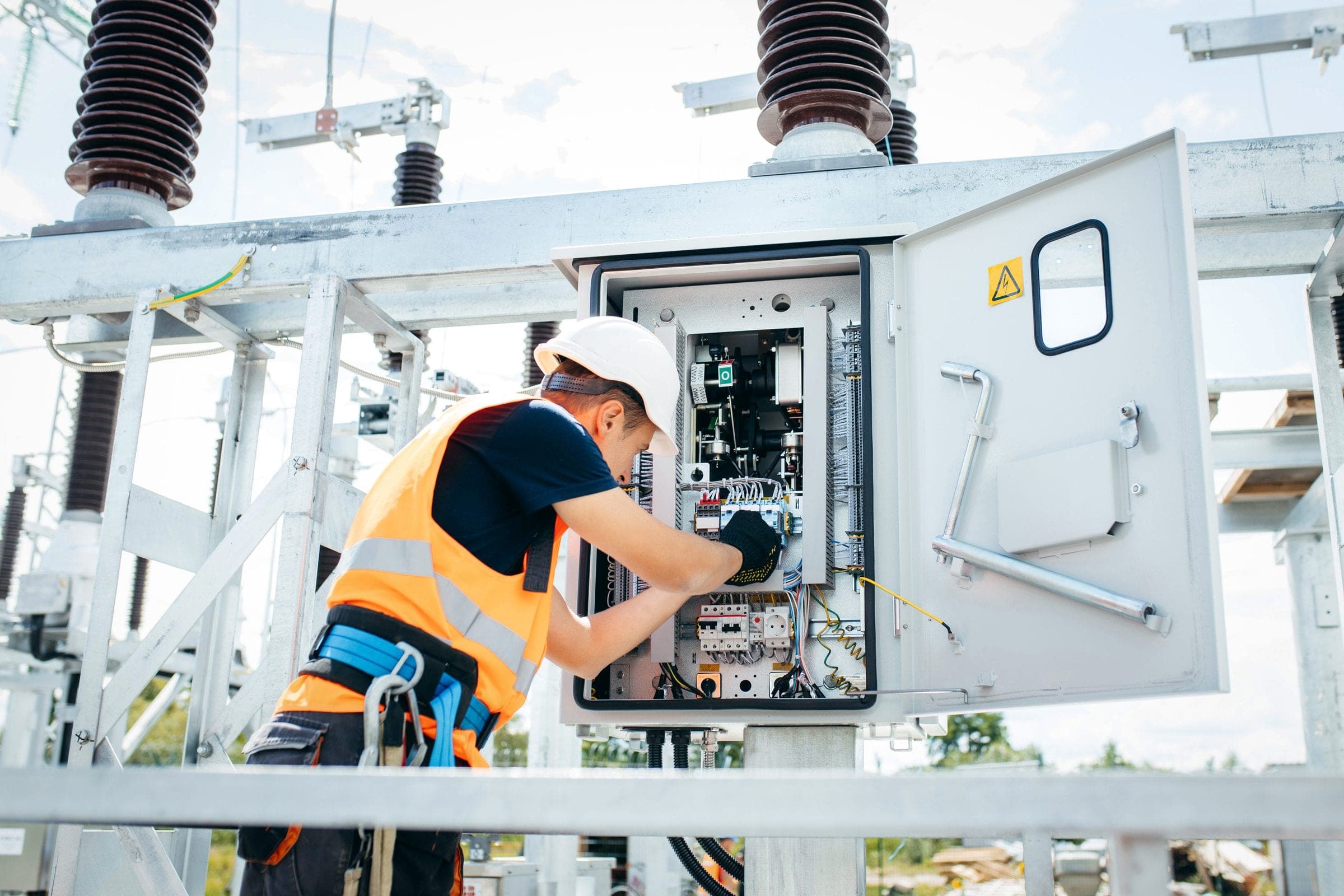
Field execution, planned migration, final testing, commissioning, and startup support.
Modernizing a substation is not simply replacing relays, panels, or supervisory systems. Retrofit begins by understanding what already exists: protection and control philosophy, secondary architecture, operating equipment, circuits, interfaces, networks, signals, documents, operating constraints, and client standards.
Based on this assessment, POWER defines the SPCS modernization strategy, preserving what remains technically suitable, addressing obsolescence, redefining functions where necessary, and planning integration between existing and new technologies.
The work progresses from engineering to configuration, integration, testing, fieldwork, commissioning, and startup support, always with a migration strategy suited to the facility’s actual conditions.
Modernize without losing sight of existing operations.
The migration strategy defines how the existing system evolves into the new architecture. POWER considers dependencies among functions, circuits, yard equipment, supervision, communications, and operations to organize implementation stages and reduce transition risks.
The sequence is defined according to actual project conditions, available windows, operating constraints, and the criticality of the functions involved.
Retrofit starts by understanding the actual system.
Installed base
Relays, IEDs, panels, controllers, yard equipment, supervisory systems, and assets that will remain or be replaced.
Protection and control
Existing philosophies, functions, logic, interlocks, commands, blocks, permissives, and relationships with primary equipment.
Circuits and signals
Existing inputs, outputs, control and trip circuits, contacts, measurements, indications, and electrical interfaces.
Communications and supervision
Network architectures, integration among IEDs, gateways, SCADA systems, and interfaces with control centers.
Documentation
Diagrams, signal lists, drawings, logic, configuration files, and other information available to reconstruct the installed scenario.
Implementation
Migration sequence, temporary interfaces, testing, fieldwork, commissioning, and startup strategy.
Existing facility
The operating substation, with its installed base, documentation, limitations, and functional history.
Installed base
Primary equipment in service, with legacy secondary architecture.
Assessment
Technical assessment of the existing architecture, equipment, obsolescence, and operating needs.
Critical areas
Obsolescence points and functional limitations mapped by bay.
Engineering
Definition of the architecture, functions, interfaces, protection and control philosophy, and modernization strategy.
Architecture
Redesigned topology, control hierarchy, and interfaces.
Protection and control
Configuration, parameterization, and integration of the devices defined by the project.
Relays and IEDs
Parameterization, settings, and logic configured by bay.
Automation and supervision
SCADA integration, communications, logic, protocols, and automation architecture.
Protocols
IEC 61850, GOOSE, MMS, and integration with the facility network.
Fieldwork and commissioning
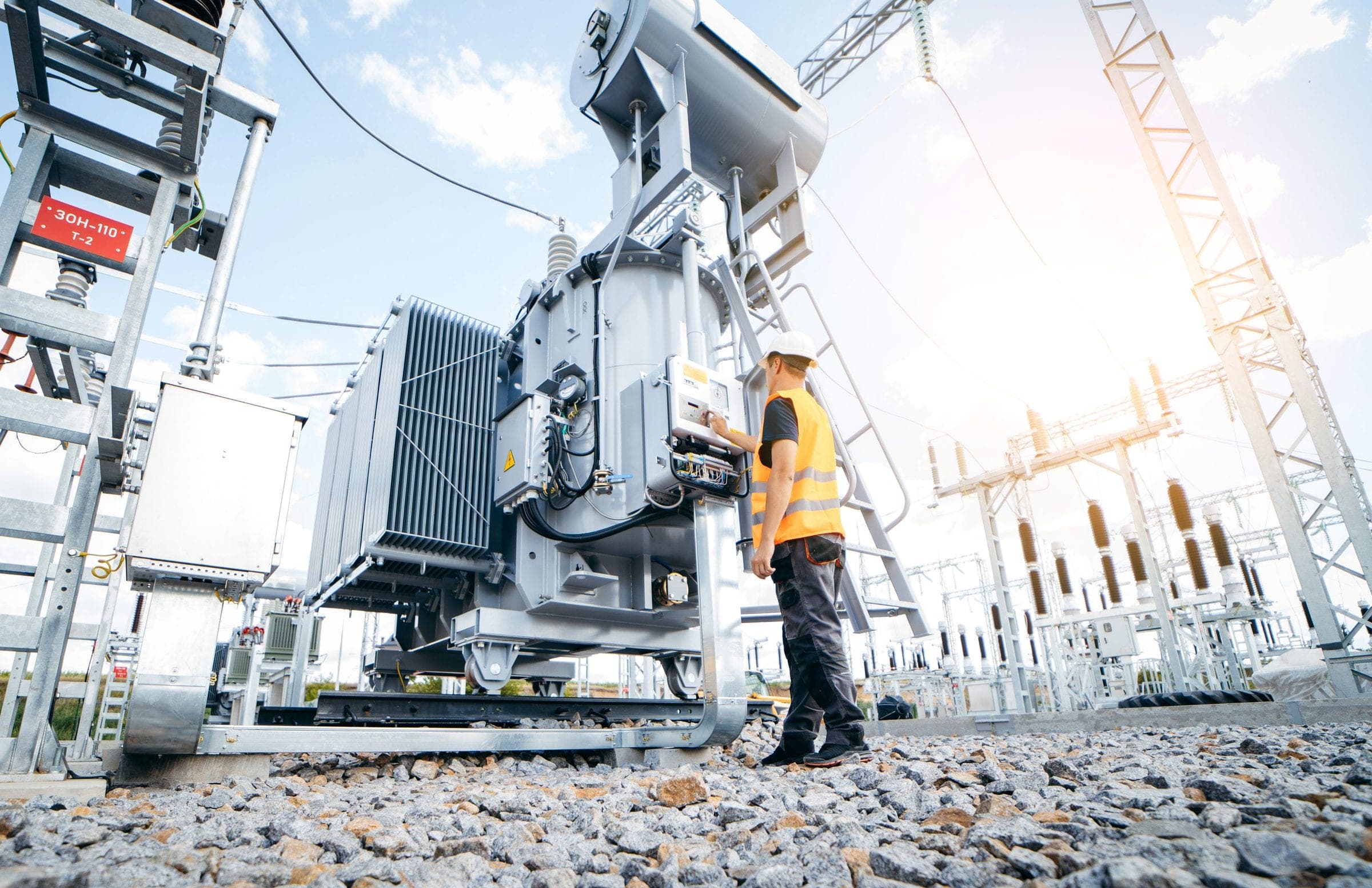
Connections to primary equipment, functional validation, and startup follow-up.
Functional testing
Point-to-point validation between secondary and primary systems.
Modernized substation
An integrated, documented, and supported system, with critical functions preserved and expanded capability.
Final documentation
Architecture, parameter settings, and technical records delivered as-built.
Retrofit does not start by selecting new equipment. It starts by understanding the system already in operation.
This understanding determines what should remain, what must change, and how each new technology will be incorporated into the existing architecture.
The project defines the technology. Not the other way around.
Our engineering starts from the functions the system must perform and the facility’s actual conditions. We analyze the protection and control philosophy, installed base, secondary architecture, yard-equipment interfaces, signal availability, communication networks, supervision requirements, client standards, and implementation strategy.
This assessment defines the architecture, functions, protocols, IEDs, relays, controllers, gateways, switches, and supervision platforms compatible with the performance, integration, and availability required by the project.
Working across brands means more than knowing different equipment. It means mastering the engineering required to make it operate as a unified system.
 Parameterization · POWER
Assessment of the existing philosophy, diagrams, primary equipment, secondary circuits, interfaces, signals, operating constraints, and client standards.
Definition of protection, control, supervision, and communication topology, hierarchy levels, redundancies, networks, and interfaces with existing systems.
Protection functions, logic, interlocks, commands, automation, oscillography, event records, synchronization, communications, and SCADA integration.
Selection of relays, IEDs, controllers, switches, gateways, and platforms according to functional requirements and the approved architecture.
What must be resolved before equipment selection.
Technology selection follows from a consistent architecture. Every project requires evaluating functions, interfaces, communications, operations, availability, and implementation strategy as parts of the same system.
Protection
Protection philosophy and functions, selectivity, operation, trip, blocking, breaker failure, and primary-equipment interfaces.
FUNCTIONS · SETTINGS · LOGIC
Control
Local and remote control, interlocks, permissives, automation, bay control, and operating sequences.
COMANDO · INTERTRAVAMENTO · BAY
Communications
Integration among IEDs, automation, and supervision systems through architectures and protocols compatible with the project.
IEDs · REDES · PROTOCOLOS
Network and synchronization
Network topology, availability, redundancy, segregation, and device time synchronization.
TOPOLOGIA · DISPONIBILIDADE · TEMPO
Supervision
SCADA, screens, alarms, events, commands, histories, and control-center interfaces.
SCADA · SOE · OPERATION
Testing and commissioning
Functional validation, point-to-point testing, logic verification, and integration among the secondary system, primary equipment, and operations.
TESTING · VALIDATION · STARTUP
Each function has a specific role in the protection philosophy and is applied according to the equipment, topology, and project selectivity study.
21Distance
Detects faults by impedance and determines the operating zone.
Application — Transmission lines and circuits where current-based selectivity is not enough.
25Synchronism check
Checks voltage, frequency, and phase angle before allowing breaker closing.
Application — Generator paralleling, busbar interconnection, and system reclosing.
27/59Under- and overvoltage
Operates when voltage leaves the defined operating range due to a fault or disturbance.
Application — Protection of busbars, generators, motors, and loads sensitive to voltage variation.
50/51Phase overcurrent
Combines instantaneous (50) and time-delayed (51) operation against phase short circuits.
Application — Primary protection of feeders, transformers, and radial circuits.
50N/51NNeutral overcurrent
The same phase-function logic applied to residual-sequence current.
Application — Ground-fault detection in grounded systems or systems with a neutral resistor.
50BFBreaker failure
Checks whether the breaker interrupted fault current within the expected time.
Application — Backup protection that trips adjacent breakers when the main breaker does not open.
67/67NDirectional overcurrent
Adds fault-flow direction information to overcurrent protection.
Application — Ring, meshed, or distributed-generation systems where current can flow in both directions.
81Frequency
Monitors system under- and overfrequency and can trigger load or generation shedding.
Application — Stability of systems with onsite generation, islanding, and load-shedding schemes.
87Differential
Compares equipment input and output currents; any difference indicates an internal fault.
Application — Transformers, generators, busbars, and short lines requiring fast and selective operation.
and other functions according to the study, protection philosophy, and application.
Different systems must speak the same operational language.
POWER integrates protection, control, automation, and supervision while considering equipment interoperability, communication requirements, and compatibility with the existing architecture.
Multi-brand technology ecosystem
The architecture is not built around a brand. We select and integrate technologies from different manufacturers according to technical requirements, client standards, installed-base compatibility, equipment life cycle, and implementation strategy.




Engineering before product.
From the protection function to control-center operations, POWER’s responsibility is to turn requirements, equipment, and interfaces into an architecture that operates as a system.
First we define what the system must do. Then we define which technologies should do it.
Read the technical guide on SPCS protection, control, and retrofitSupervision on the platform the system requires.
POWER develops and integrates supervisory systems for local substations and control centers, adapting architecture, communications, screens, alarms, and operating functions to client requirements and existing infrastructure.
- Local supervisory system
- Control center
- Multiple-substation integration
- Alarms and events
- Communication with IEDs and equipment
- Integration with existing networks and systems

Integration ready for the digital substation.
At POWER, IEC 61850 is treated as an integration architecture connecting IEDs, networks, protection and control functions, automation, supervision, and operation. Engineering considers the existing system, vendor interfaces, and project requirements to turn digital communication into verifiable operational behavior.
Protection, control, and supervision systems compatible with IEC 61850 architectures, from device to operation.
IEDs
Protection and control devices configured according to the project functions.
Communication network
Infrastructure that transports information between devices, systems, and operating levels.
GOOSE e MMS
Communication services applied to the exchange of events, states, commands, and data defined by the architecture.
Control and automation
Logic, interlocks, and sequences integrated into the substation’s behavior.
Supervision and operation
Alarms, events, measurements, commands, and information made available to the supervisory system and operation center.
How POWER delivers
- 01
Assessment
Assessment of the installed base, documentation, IEDs, networks, signals, functions, and operating constraints.
- 02
Architecture
Definition of interfaces, information flows, communication, and integration between new and existing systems.
- 03
Configuration and integration
IED configuration, logic development, and integration with protection, control, and supervision.
- 04
Testing and commissioning
Functional verification at the factory or in the field and validation of integrated behavior before commissioning.
- 05
Final documentation
Configuration, testing, and architecture records, together with as-built documentation for the implemented solution.
Scope-related deliverables
- system architecture and interfaces
- configurations and settings defined in the project
- protection, control, and automation logic
- integration of signals, alarms, events, commands, and measurements
- testing records and functional validation
- final documentation and as-built records
Each engagement has its own limits; deliverables follow the scope defined for the project.
Modernizing a digital substation requires integrating devices, communication, and operation as parts of the same system.
End-to-end substation automation.
From protection to supervision, from communications to field connections, POWER integrates the layers that make a substation operate as a unified system.
Understand the architecture of a substation automation system →Primary equipment
Circuit breakers, transformers, disconnect switches
Protection and control
Relays, IEDs, bay controllers
Communications
Networks, protocols, IEC 61850
Supervision
SCADA, screens, alarms, and events
Operations
Control center and remote control
Integrated system
Five layers operating as a unified system, with information available end to end.
Engineering from design to operation.
Protection and Control
Relays, IEDs, and protection logic for multi-brand SPCS.
Supervision
SCADA systems for local substations and control centers.
Automation
Layer integration — from primary equipment to operations.
Field
Physical and logical interconnections with yard equipment.
Engineering
Detailed design, configuration, and systems integration.
Maintenance and After-sales
Preventive and corrective maintenance and specialized technical support.
Engineering that must work in the real world.
We turn technical requirements into executable solutions suited to the facility and prepared for operation and maintenance.
Engineering is also a deliverable.
Designs, studies, parameterization, integration, and field services can be contracted independently according to each project’s scope and needs.
 POWER engineering area
Design
Protection, control, supervision, and automation engineering for SPCS.
Configuration
Parameterization of relays, controllers, automation logic, and supervisory systems.
Integration
Communications, protocols, networks, IEC 61850, and system interfaces.
Field
Physical and logical interconnections with yard equipment and existing systems.
Maintenance
Preventive and corrective work on automated systems.
After-sales
Technical support, updates, follow-up, and specialized assistance.
Power conversion with NPT technology.
For projects requiring DC power, POWER works exclusively with power-conversion solutions from NPT Energia, a MACH Capital group company specializing in industrial rectifiers and DC systems for critical applications.
Discover NPT Energia
Do you have a substation project in the decision stage?
Our technical team assesses the current scenario and proposes the most suitable protection, control, or automation solution — without ties to any specific manufacturer.